The brief
BitX is a cryptocurrency exchange for retail traders. The client wanted one place to buy crypto, trade spot pairs, trade futures with leverage and place short binary options on price, all with live market data and an operator back office to approve users, manage wallets and set fees.
The exchange has not launched yet. What is here is the platform as it stood when work paused in January 2026: the trading core works end to end, and some secondary screens are still mockups.
What I built
I designed the system and built almost all of it:
The backend: about 137 API endpoints over 30 database models, with the matching engines, settlement, wallets, deposits, withdrawals and KYC
The market-data worker that streams live prices, order books and trades from Binance
The admin panel, on my own
The trading, wallet and dashboard screens of the web app
Two developers joined for a few weeks in late 2025 and built some of the market-information screens, such as price predictions and token lists. Of the code in the backend, 99% is mine.
A matching engine that cannot lose money
The heart of an exchange is the matching engine, and the rule is simple: no matter how many orders arrive at once, no balance can ever be spent twice. Every fill runs in its own serializable database transaction that locks the rows it touches. Prices and amounts use exact decimal maths, never floating point.
Orders match by price, then time. Trades fill at the resting order's price, partial fills carry over, and a user's orders never match each other. Maker and taker fees come from the admin settings, and every trade writes ledger entries for both sides and the fee, so the books always balance.
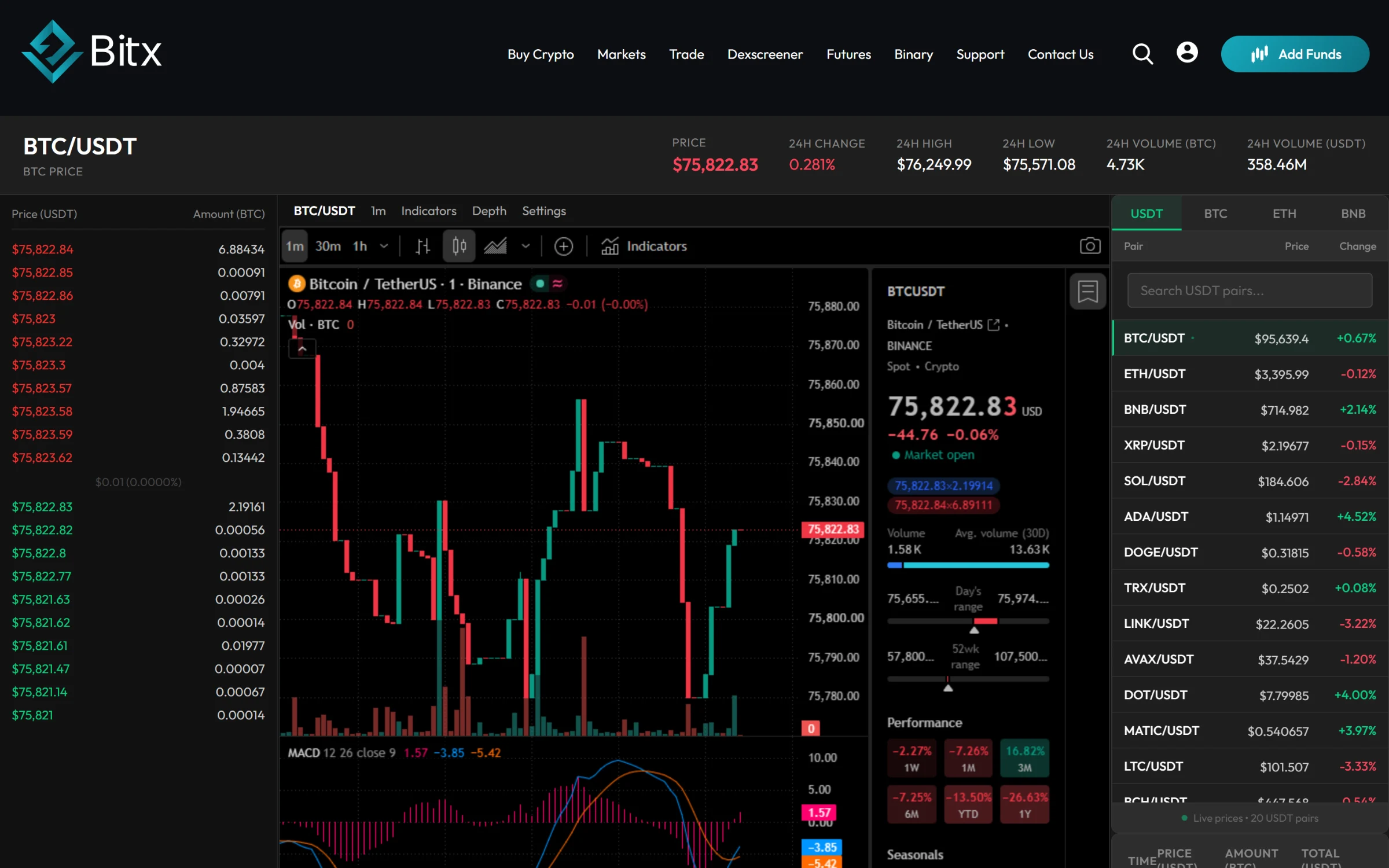
Spot trading: live chart, order book, recent trades and the order form.
Futures and binary options
Futures trading has its own engine on the same pattern, with positions, leverage tiers, isolated and cross margin and an insurance fund. Liquidation, funding payments and auto-deleveraging are written and are the next step to schedule.
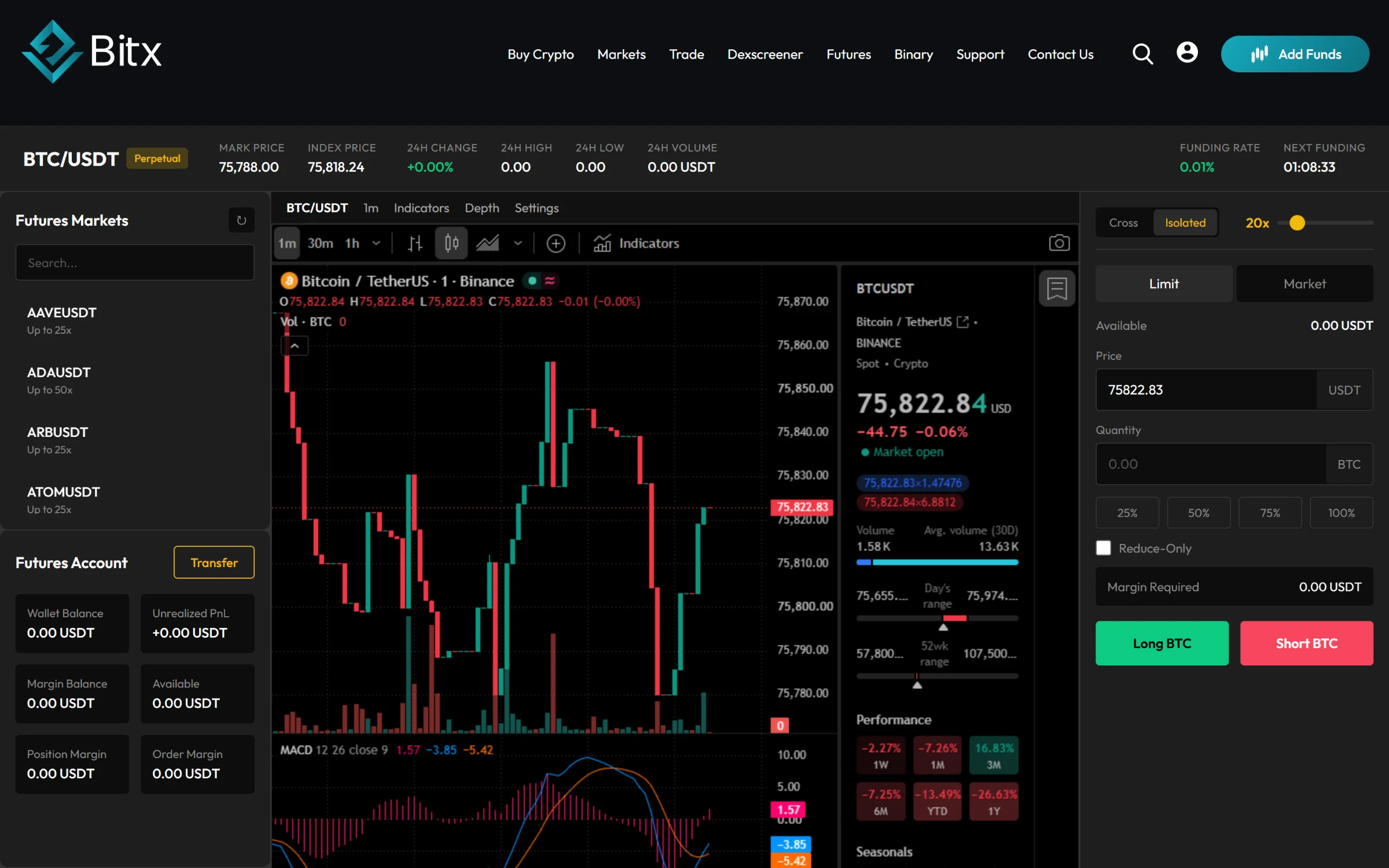
Futures, with leverage, long and short.
Binary options let a trader call the price up or down over a set time, from 30 seconds to an hour. A separate settlement process closes expired trades every second at the market price, in batches, with retries and backoff, so a slow price feed never leaves a trade unsettled.
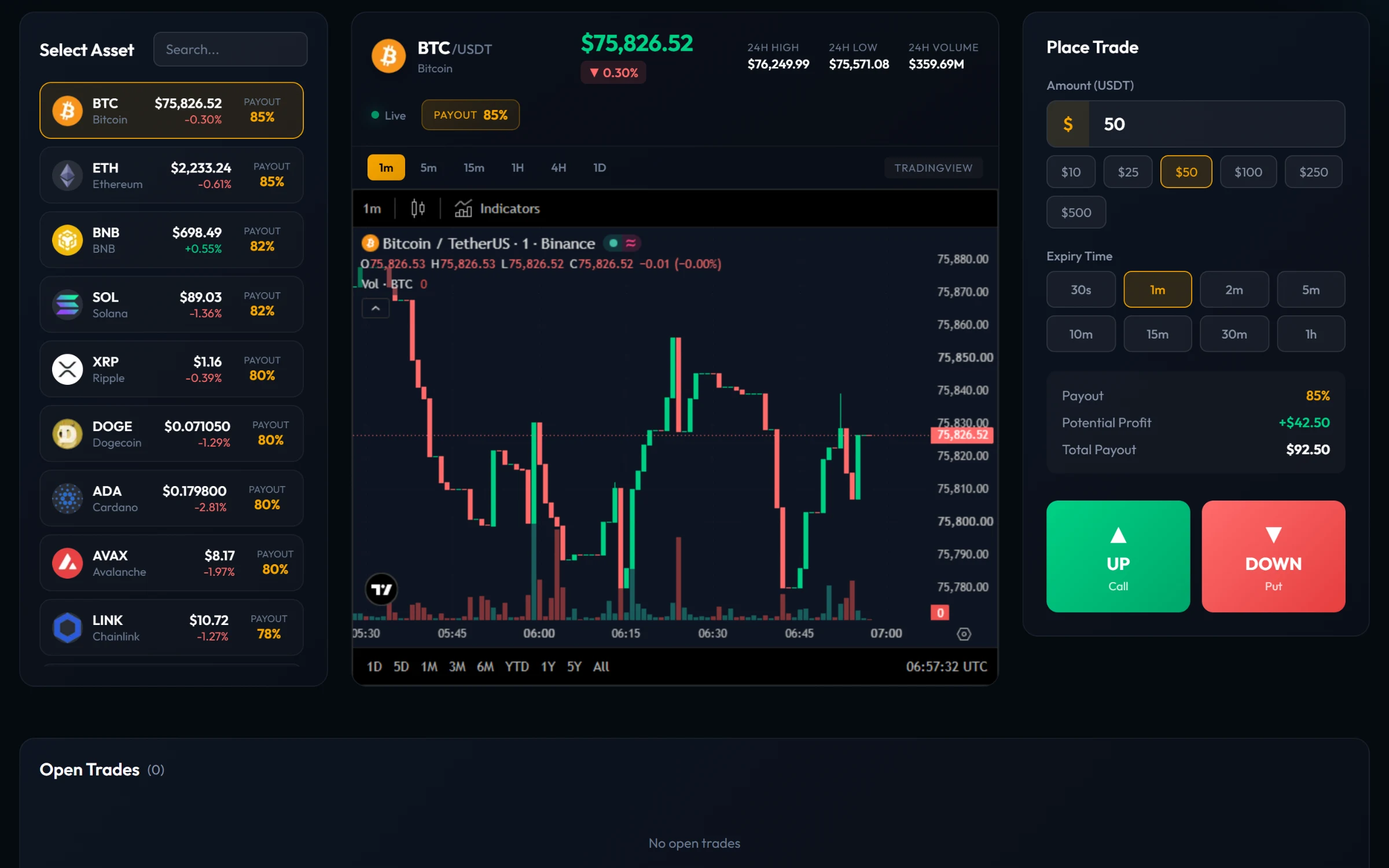
Binary options: pick an asset, an amount and an expiry, then call it up or down.
Live market data, only when someone is watching
Prices, order books and trades stream from Binance into Redis through a worker, and out to browsers over WebSockets. Streaming every market all the time would be wasteful, so the server tells the worker to open a market's stream when its first viewer arrives and close it when the last one leaves. Markets are grouped into eight categories, such as AI, meme, layer 1 and real-world assets, which refresh every six hours.
Wallets, deposits and withdrawals
Each user has balances split into available and locked funds. Deposits come in through CoinPayments: the user gets a deposit address, and the platform credits the balance when CoinPayments confirms the payment. Every confirmation is verified with an HMAC signature and duplicates are rejected. Withdrawals lock the funds and wait for an operator to approve them.
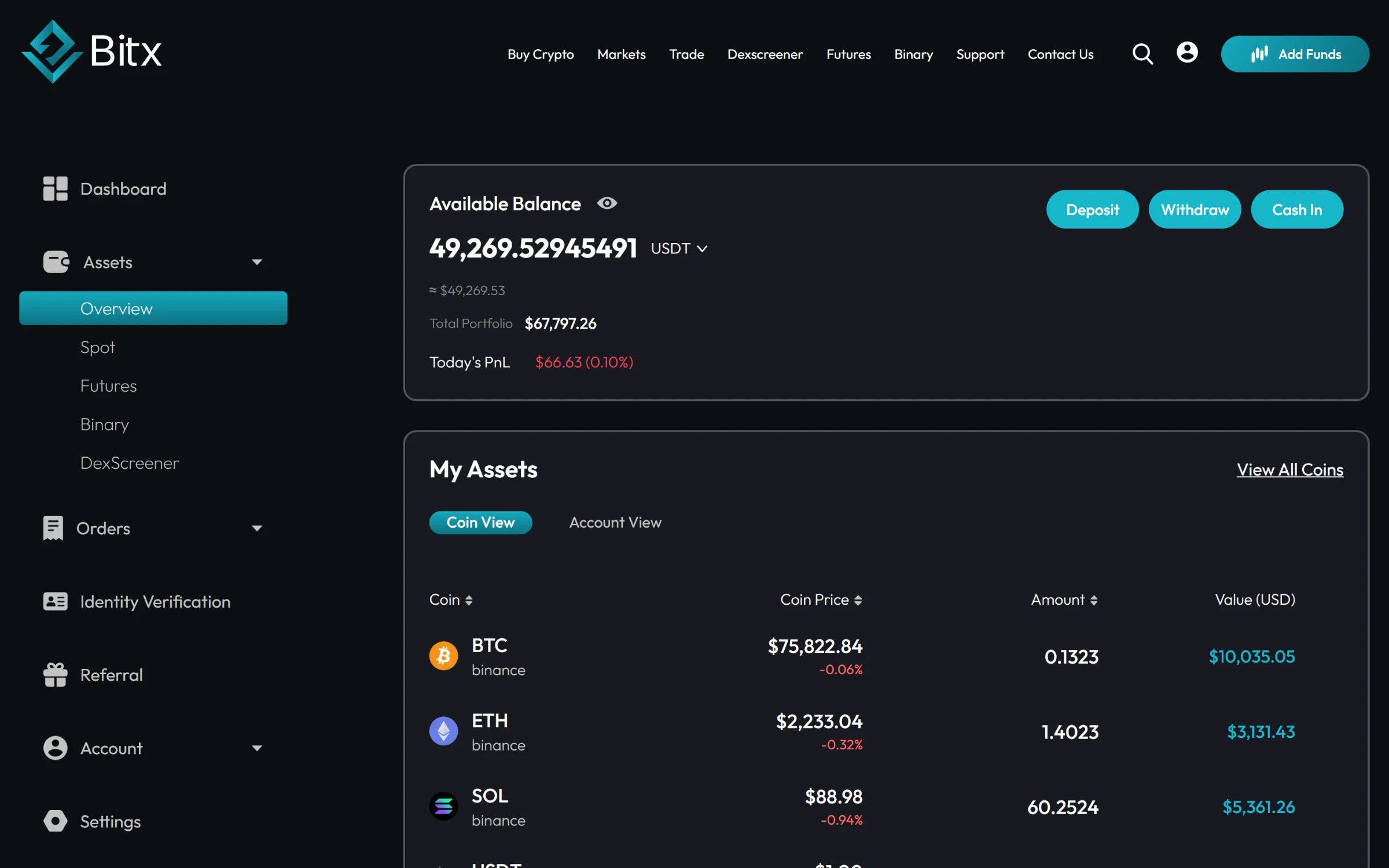
A user's assets across spot, futures and binary wallets.
Sign-up, KYC and the back office
Traders sign up and log in with a one-time code, then go through a three-step account setup that uploads identity documents to private cloud storage. Operators review them in the admin panel.
The admin panel runs the exchange:
users and KYC review
wallets, deposits and withdrawal approvals
spot, futures and binary trading oversight
support tickets
platform settings, from maker and taker fees to switching trading on and off
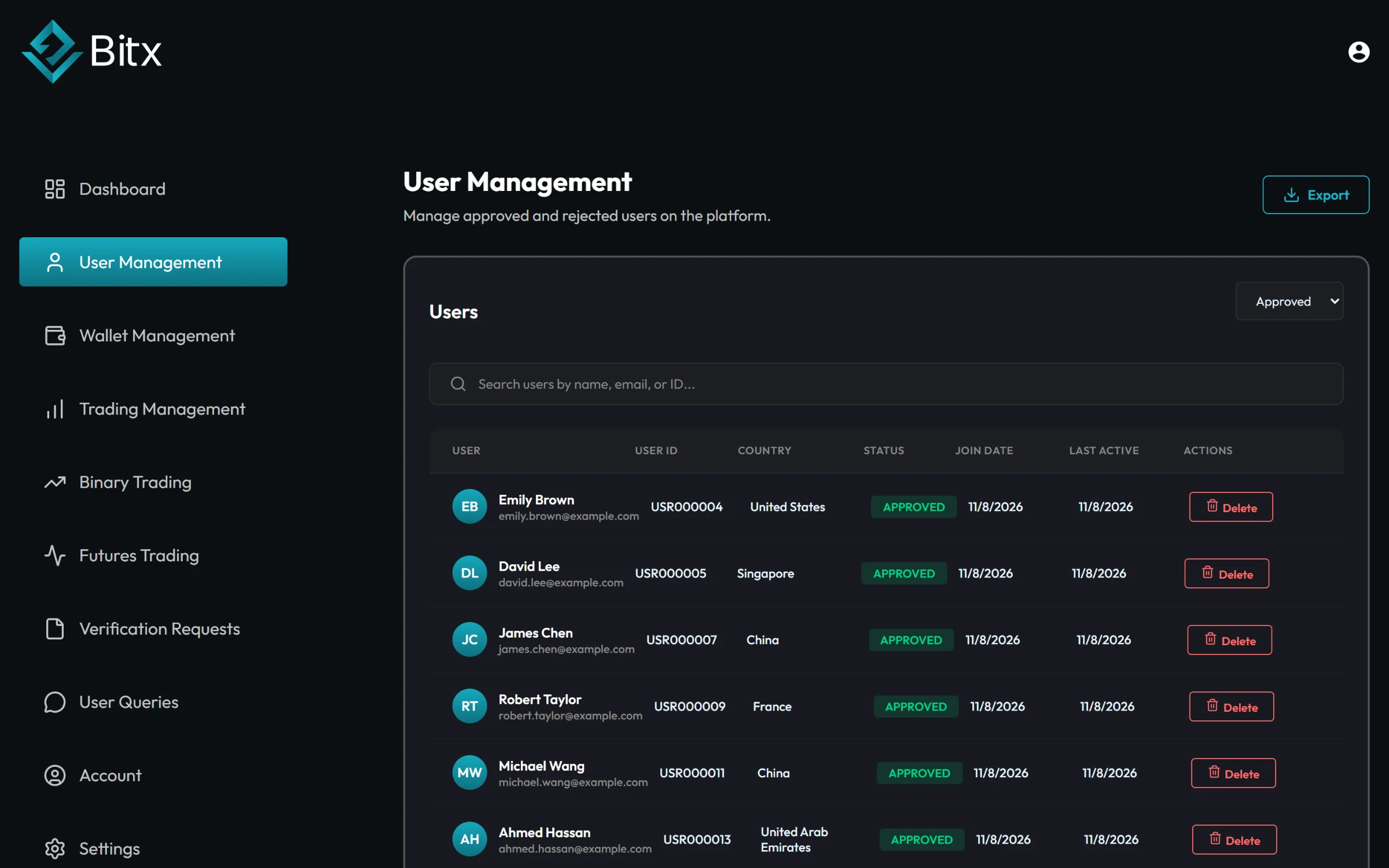
User management in the admin panel.
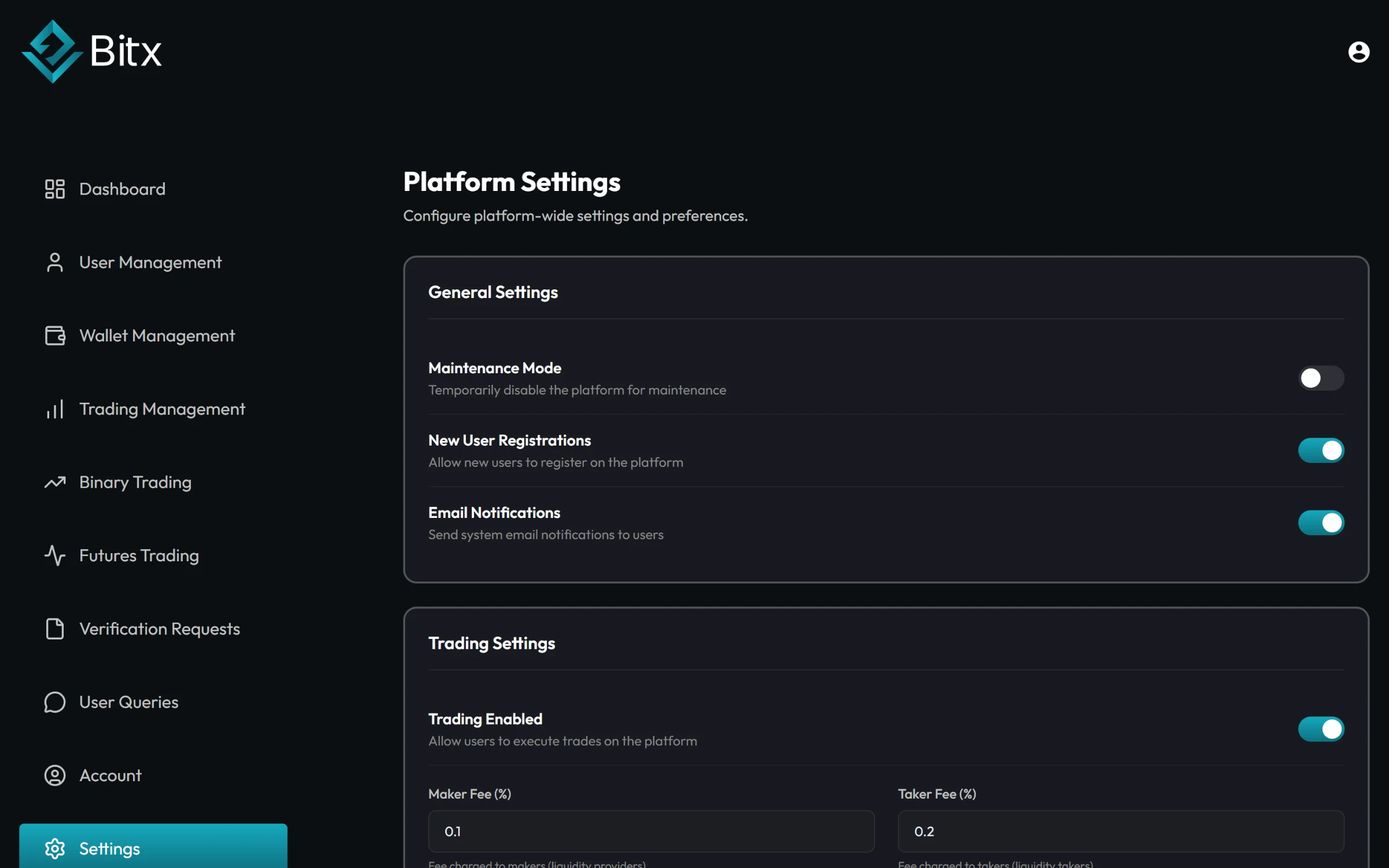
Platform settings: maintenance mode, registrations, trading and fees.
Where it stands
Spot trading, binary options, wallets, deposits, withdrawals, KYC, support and the admin panel work end to end. Futures takes orders and manages positions; its liquidation and funding schedules are next. P2P trading, referrals and a few account pages are designed but not yet connected.